
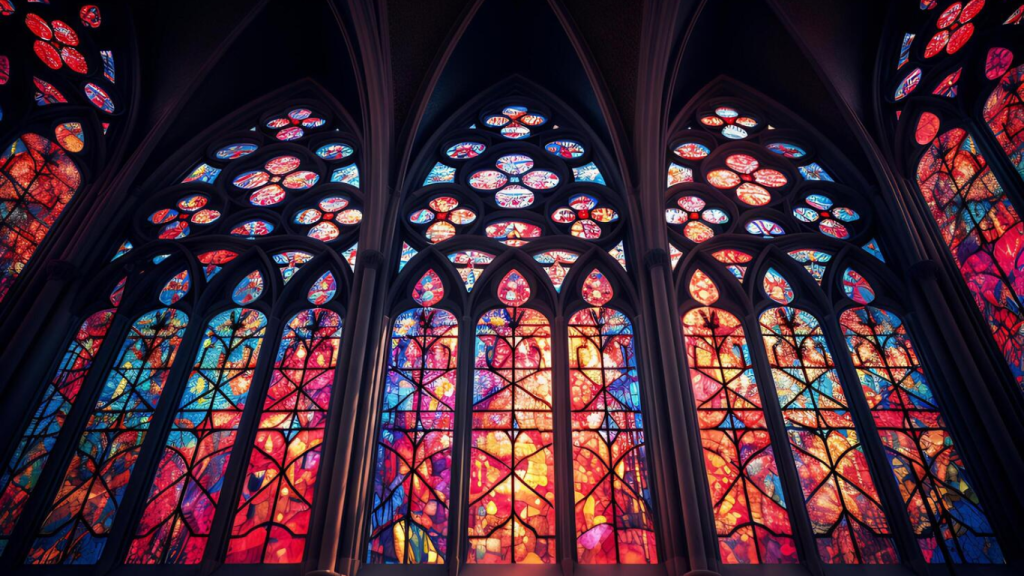
Introduction: Why Do Gothic Architecture Windows Continue to Fascinate the World?
Imagine standing inside a medieval cathedral where colorful rays of sunlight spill across ancient stone floors. Every beam of light tells a story, every pane of glass carries centuries of craftsmanship, and every towering window inspires a sense of wonder. This is the enduring magic of Gothic architecture windows.
Many people admire Gothic cathedrals without fully understanding what makes their windows so extraordinary. Some confuse Gothic windows with ordinary stained glass, while others wonder why medieval builders invested so much effort in creating such enormous openings in stone walls. Questions like What are Gothic style windows called?, What are the features of Gothic windows?, and Did Gothic architecture have small windows? are among the most searched topics online.
Understanding Gothic architecture windows is about more than identifying architectural features. These remarkable creations represent a revolutionary moment in design, engineering, religion, and art. They transformed dark Romanesque churches into luminous spaces filled with symbolism and storytelling, influencing architecture for more than 800 years.
Whether you’re an architecture enthusiast, history lover, student, designer, or homeowner seeking inspiration from Gothic Revival styles, this guide will help you appreciate why these magnificent windows remain among humanity’s greatest artistic achievements.
If you enjoy exploring the history behind iconic architectural styles, you’ll also find fascinating cultural stories at Culture Mosaic, where heritage, design, and history come together.
What Are Gothic Architecture Windows?
Gothic architecture windows are tall, vertically oriented openings designed primarily between the 12th and 16th centuries across Europe. Unlike the relatively small windows of earlier Romanesque churches, Gothic windows emphasized height, light, and intricate decoration.
Their development became possible because Gothic builders introduced revolutionary engineering innovations, including:
- Pointed arches
- Ribbed vaults
- Flying buttresses
- Improved stone tracery
These structural breakthroughs transferred much of a building’s weight away from exterior walls. Instead of thick, solid masonry, architects could install enormous glass windows that flooded interiors with natural light.
The result was one of architecture’s greatest transformations.
Instead of entering a dim stone church, worshippers walked into brilliant spaces glowing with colored glass that illustrated biblical stories, saints, kings, and scenes from daily medieval life.
Today, these windows continue inspiring architects, artists, historians, and homeowners around the world.
The Birth of Gothic Windows: A Revolution in Medieval Architecture
Before the Gothic period, most European churches followed the Romanesque style.
Romanesque churches featured:
- Thick stone walls
- Rounded arches
- Heavy construction
- Small windows
- Dark interiors
Although structurally stable, these buildings often felt enclosed and gloomy.
Around the mid-12th century in France, visionary builders began experimenting with new engineering techniques. One of the earliest and most influential examples was the rebuilding of the Basilica of Saint-Denis under Abbot Suger, who believed that divine light could bring people closer to God.
His philosophy changed architecture forever.
Rather than treating windows as simple openings, Gothic architects made them the centerpiece of the building. Sunlight became part of the design itself.
This innovation spread rapidly across France before reaching England, Germany, Spain, Italy, Belgium, and much of Europe.
Within a century, Gothic cathedrals became famous not only for their soaring towers but also for their breathtaking stained glass windows gothic architecture enthusiasts still admire today.
Why Were Gothic Architecture Windows So Important?
To modern visitors, Gothic windows appear beautiful.
To medieval people, they were much more.
They served several vital purposes simultaneously.
1. They Filled Churches with Divine Light
Medieval Christians believed light symbolized God’s presence.
Large stained glass windows transformed ordinary sunlight into vibrant displays of blue, red, green, and gold, creating an atmosphere unlike any other architectural style.
2. They Educated the Public
Most medieval Europeans could not read.
Windows became visual books.
Artists illustrated:
- Stories from the Bible
- Lives of saints
- Moral lessons
- Historical events
- Local patrons
- Royal families
Entire communities learned religious history simply by looking upward.
3. They Demonstrated Wealth and Skill
Constructing massive stained glass windows required extraordinary craftsmanship.
Cathedrals competed to commission increasingly elaborate designs that reflected civic pride and religious devotion.
Many of these masterpieces survive today, attracting millions of visitors every year and demonstrating the lasting cultural importance of Gothic architecture windows.
The Defining Characteristics of Gothic Architecture Windows
Although Gothic windows evolved over several centuries, they share several recognizable features.
Pointed Arches
The pointed arch is perhaps the defining characteristic of Gothic architecture.
Unlike rounded Romanesque arches, pointed arches distribute structural forces more efficiently.
This innovation allowed builders to construct:
- Taller windows
- Wider openings
- Higher ceilings
- More graceful proportions
The pointed arch became synonymous with Gothic design and remains a defining feature in Gothic Revival buildings today.
Exceptional Verticality
Gothic architects wanted visitors to look upward.
Everything—from columns to towers to windows—emphasized height.
Most Gothic windows stretch dramatically toward the ceiling, reinforcing the spiritual symbolism of heaven.
This vertical emphasis also makes interiors feel larger than their actual dimensions.
Intricate Stone Tracery
One of the most admired features of Gothic windows is stone tracery.
Tracery refers to decorative stone frameworks that divide large windows into smaller sections.
These elegant patterns became increasingly sophisticated over time.
Popular tracery designs include:
- Trefoils
- Quatrefoils
- Flowing curves
- Geometric circles
- Flame-like patterns
Beyond decoration, tracery also strengthened enormous glass surfaces.
Extensive Use of Stained Glass
No discussion of stained glass windows gothic architecture would be complete without recognizing their extraordinary artistry.
Medieval glassmakers used metallic oxides to create vivid colors:
- Cobalt produced blue
- Copper created green
- Gold generated ruby red
- Silver stain produced yellow
- Manganese formed purple
Artists assembled thousands of small glass pieces using lead strips before installing them within intricate stone frames.
Even after hundreds of years, many original Gothic stained glass windows continue glowing with remarkable brilliance.
For readers interested in exploring the beauty and symbolism of medieval interiors, this detailed guide on Gothic Stained Glass Windows Interior provides additional insight into how these masterpieces transformed sacred spaces.
Engineering Behind Gothic Windows
The beauty of Gothic architecture windows would never have been possible without revolutionary engineering.
Unlike earlier builders, Gothic architects developed systems that redirected structural pressure away from window openings.
Three innovations worked together.
Pointed Arches
Reduced sideways pressure.
Ribbed Vaults
Concentrated ceiling loads into slender columns.
Flying Buttresses
Transferred roof weight outward through exterior supports.
Together, these innovations allowed cathedral walls to become remarkably thin.
Instead of solid masonry, builders replaced much of the wall with glass.
For medieval Europe, this represented an astonishing engineering achievement.
Many historians consider it one of the greatest structural breakthroughs in architectural history.
Main Types of Gothic Architecture Windows
Not all Gothic windows look alike.
Architects developed several distinctive forms, each serving unique structural and artistic purposes.
Lancet Windows
Among the earliest and simplest examples are lancet windows gothic architecture enthusiasts immediately recognize.
These windows feature:
- Tall proportions
- Narrow profiles
- Pointed arches
- Minimal tracery
They often appear individually or grouped in pairs, threes, or fives.
Early English Gothic architecture made extensive use of lancet windows because they combined elegance with structural simplicity.
Their clean vertical lines continue inspiring modern churches and Gothic Revival homes.
Paired and Grouped Windows
Rather than installing one large opening, architects frequently combined several lancet windows beneath larger arches.
These arrangements improved:
- Structural stability
- Visual rhythm
- Interior illumination
- Decorative opportunities
Many cathedrals gradually evolved from grouped lancets toward increasingly elaborate tracery designs during the High Gothic period.
Wheel Windows
Before the fully developed rose window became widespread, many churches incorporated wheel windows.
These circular openings featured spoke-like stone divisions resembling wagon wheels.
They served as an important transitional form in Gothic architecture and laid the foundation for the spectacular rose windows that would later define many cathedrals.
Why Gothic Windows Still Inspire Modern Architecture
Although centuries have passed since the height of medieval cathedral construction, Gothic architecture windows continue to influence architects, interior designers, artists, and homeowners around the world.
The 19th-century Gothic Revival movement revived pointed arches, decorative tracery, stained glass, and tall window proportions for churches, universities, civic buildings, and even private residences. Today, modern interpretations combine these historic elements with contemporary materials, proving that the timeless appeal of Gothic design has never truly faded.
Whether admired in a UNESCO-listed cathedral or adapted into a modern home, Gothic windows remind us that architecture can be both structurally brilliant and emotionally moving.
For readers seeking additional historical context and examples, this resource on Gothic architecture windows offers another perspective on the craftsmanship and evolution of these iconic designs.
Coming in Part 2
In the next part of this guide, we’ll explore:
- Rose windows Gothic architecture and why they became cathedral masterpieces.
- Clerestory windows Gothic architecture and their role in flooding interiors with light.
- The evolution from Early Gothic to Rayonnant and Flamboyant styles.
- Regional differences across France, England, Germany, Spain, and Italy.
- Which country has the most Gothic architecture?
- Where is the largest Gothic window?
- Why is it called a rose window?
- Famous Gothic cathedrals and their extraordinary windows.
- Modern applications of Gothic and Gothic Revival window design.
Gothic Architecture Windows (Part 2): Masterpieces of Light, Faith, and Engineering
In Part 1, we explored how Gothic architecture windows revolutionized medieval building design by replacing heavy stone walls with soaring expanses of glass. We also examined their origins, engineering breakthroughs, and early window types.
Now, let’s discover the most celebrated Gothic window styles, how they evolved across Europe, and why they continue to inspire architects, artists, and historians today.
Rose Windows: The Crown Jewel of Gothic Architecture
Among all forms of rose windows Gothic architecture, none captures the imagination quite like the magnificent circular windows that adorn Europe’s greatest cathedrals.
A rose window is a large, circular stained glass window filled with intricate stone tracery that radiates outward from a central point, creating a flower-like pattern. These breathtaking designs became one of the defining symbols of High Gothic architecture.
Unlike the simpler wheel windows of earlier periods, rose windows combined advanced engineering with extraordinary artistic vision. Their complexity reflected both the growing confidence of medieval builders and the increasing importance of light as a spiritual symbol.
Why Is It Called a Rose Window?
Many people ask, “Why is it called a rose window?”
The name comes from the resemblance of its stone tracery to the petals of a fully bloomed rose. While medieval builders did not always use this term, later historians adopted “rose window” because the radial geometry closely resembles a flowering rose.
The rose itself carried symbolic meaning in medieval Christianity, often representing:
- Divine perfection
- Heaven
- Eternal life
- The Virgin Mary
- God’s infinite creation
As sunlight passed through colorful glass, worshippers experienced a dramatic display of light that reinforced these spiritual themes.
The Anatomy of a Rose Window
Although every cathedral designed its own unique masterpiece, most rose windows share several essential components.
Circular Frame
The massive stone ring supports the entire window while distributing weight evenly.
Stone Tracery
Delicate stone ribs divide the glass into hundreds of decorative sections.
Patterns often include:
- Circles
- Trefoils
- Quatrefoils
- Stars
- Floral motifs
- Radiating spokes
Colored Glass
Thousands of individually crafted pieces combine to create vivid biblical scenes and symbolic imagery.
Central Medallion
Many rose windows feature Christ, the Virgin Mary, or another important religious figure at the center, surrounded by saints, angels, prophets, or apostles.
Famous Rose Windows Around the World
Some of history’s greatest examples continue attracting millions of visitors each year.
Notre-Dame Cathedral, Paris
Perhaps the world’s most famous rose windows are found at Notre-Dame Cathedral.
Its three enormous rose windows date primarily to the 13th century and remain remarkable examples of medieval craftsmanship despite centuries of restoration.
Their vibrant blues and reds continue inspiring architects and artists worldwide.
Chartres Cathedral
Chartres Cathedral possesses one of the finest surviving collections of medieval stained glass.
Many original windows remain intact after more than 800 years.
Its celebrated north rose window is considered among the greatest achievements of Gothic art.
Reims Cathedral
Reims Cathedral combines elegant tracery with brilliant stained glass, including later additions by renowned artist Marc Chagall.
The building demonstrates how Gothic windows continued evolving over centuries while respecting medieval traditions.
Clerestory Windows in Gothic Architecture
Another defining innovation is the use of clerestory windows Gothic architecture enthusiasts admire in nearly every major cathedral.
What Are Clerestory Windows?
Clerestory windows are rows of windows placed high above eye level, usually above the nave and below the roof.
Their primary purpose is simple yet transformative:
They flood the interior with natural light without compromising structural stability.
Because Gothic architects employed flying buttresses, they no longer needed thick upper walls.
Instead, these elevated walls became continuous bands of stained glass.
Why Clerestory Windows Were Revolutionary
Earlier Romanesque churches often felt dim because thick masonry allowed only small openings.
Gothic clerestory windows completely changed that experience.
Benefits included:
- More daylight
- Enhanced spiritual atmosphere
- Improved ventilation
- Greater visual height
- Expanded opportunities for stained glass storytelling
Visitors entering Gothic cathedrals often described feeling transported into a heavenly realm illuminated by colored light.
Lancet Windows: Elegant Simplicity
Earlier Gothic churches relied heavily on lancet windows Gothic architecture specialists recognize as the earliest mature Gothic form.
What Are Lancet Windows?
Lancet windows are:
- Tall
- Narrow
- Pointed
- Usually lacking elaborate tracery
Their shape resembles the blade of a medieval lance, giving them their name.
Although simple compared to later rose windows, lancets established the vertical rhythm that became central to Gothic design.
Where Were Lancet Windows Most Popular?
England became particularly famous for extensive lancet window designs during the Early English Gothic period.
Salisbury Cathedral provides one of the finest examples.
Architects often grouped multiple lancets together beneath larger arches, creating elegant compositions that balanced strength with beauty.
Decorative Tracery: Stone Turned Into Lace
As Gothic architecture matured, builders became increasingly ambitious.
Instead of leaving windows plain, they filled them with increasingly elaborate stone tracery.
This decorative network served two purposes:
Structural
It strengthened large expanses of glass.
Artistic
It transformed windows into breathtaking works of sculpture.
By the 14th century, tracery had evolved into incredibly sophisticated forms.
Some resembled:
- Flames
- Flowers
- Leaves
- Flowing vines
- Interlocking circles
The result was architecture that appeared almost weightless despite being constructed from thousands of tons of stone.
Gothic Revival Architecture Windows
Centuries after the medieval Gothic period ended, architects rediscovered its beauty.
The 19th century witnessed the rise of gothic revival architecture windows, particularly throughout Britain, Europe, North America, and parts of Australia.
Rather than copying medieval buildings exactly, architects adapted Gothic elements for modern construction.
Common Gothic Revival window features include:
- Pointed arches
- Decorative tracery
- Colored stained glass
- Tall proportions
- Hood mouldings
- Stone mullions
- Ornamental carvings
Many Victorian churches, universities, libraries, and private mansions proudly display these features today.
Even contemporary luxury homes occasionally incorporate Gothic-inspired windows to add timeless character.
Regional Variations Across Europe
Although Gothic architecture followed common principles, each region developed its own interpretation.
France
France is widely regarded as the birthplace of Gothic architecture.
French cathedrals emphasize:
- Monumental rose windows
- Extensive stained glass
- Graceful proportions
- Rayonnant tracery
Famous examples include:
- Notre-Dame de Paris
- Chartres Cathedral
- Amiens Cathedral
- Reims Cathedral
England
English Gothic architecture favors:
- Tall lancet windows
- Strong vertical emphasis
- Elaborate Perpendicular tracery
- Long cathedral plans
Notable examples include:
- Salisbury Cathedral
- York Minster
- Canterbury Cathedral
Germany
German Gothic architecture often emphasizes:
- Towering verticality
- Immense window height
- Complex tracery
- Dramatic interiors
Cologne Cathedral remains one of Europe’s greatest achievements.
Spain
Spanish Gothic windows frequently combine Gothic engineering with regional artistic influences.
Later styles incorporated Mudéjar decorative elements, creating uniquely Spanish interpretations of Gothic design.
Italy
Italian Gothic architecture differs noticeably from northern Europe.
Italian builders generally preferred:
- Broader wall surfaces
- More restrained tracery
- Classical influences
- Greater emphasis on marble façades
Milan Cathedral represents Italy’s most spectacular Gothic achievement.
Did Gothic Architecture Have Small Windows?
This question appears frequently in Google searches.
The short answer is both yes and no.
Early Gothic buildings sometimes retained relatively modest windows because architects were still experimenting with new engineering techniques.
However, as structural innovations improved, windows became dramatically larger.
By the High Gothic period, many cathedral walls consisted almost entirely of stained glass.
Compared with Romanesque churches, Gothic buildings unquestionably featured much larger windows.
This evolution represents one of the defining achievements of medieval architecture.
What Are the Features of Gothic Windows?
The essential characteristics of Gothic architecture windows include:
- Pointed arches
- Exceptional vertical proportions
- Stone tracery
- Large stained glass panels
- Intricate geometric patterns
- Religious storytelling
- Structural elegance
- Extensive natural lighting
- Decorative carvings
- Symbolic imagery
Together, these elements distinguish Gothic windows from every earlier architectural style.
Which Country Has the Most Gothic Architecture?
One of the most searched questions online is:
Which country has the most Gothic architecture?
Most architectural historians identify France as the country with the richest concentration of original Gothic architecture.
France not only pioneered the Gothic movement during the 12th century but also preserves some of its finest cathedrals, including:
- Chartres Cathedral
- Amiens Cathedral
- Reims Cathedral
- Notre-Dame de Paris
- Bourges Cathedral
However, Germany, England, Spain, Belgium, and the Czech Republic also possess extraordinary collections of Gothic buildings that reflect regional craftsmanship and innovation.
Social Proof: Why Gothic Windows Continue to Inspire Millions
The enduring popularity of Gothic architecture windows is evident in the millions of visitors who travel each year to experience Europe’s medieval cathedrals. UNESCO World Heritage Sites such as Chartres Cathedral, Cologne Cathedral, and Notre-Dame de Paris are celebrated not only for their architecture but also for their extraordinary stained glass and engineering achievements.
Their influence extends beyond historic monuments. Universities, churches, museums, luxury homes, and restoration projects around the world continue to draw inspiration from Gothic forms. Architects and designers regularly study these windows for lessons in proportion, light, craftsmanship, and structural innovation, proving that their appeal transcends time and culture.
Coming Up in Part 3
In the final part of this guide, you’ll discover:
- Where is the largest Gothic window?
- The complete evolution of Gothic window styles from Early Gothic to Flamboyant Gothic.
- How Gothic windows influence modern architecture and interior design.
- Practical tips for identifying authentic Gothic windows.
- Common myths and misconceptions.
- Five in-depth FAQs answering Google’s most searched questions.
- A compelling conclusion.
Gothic Architecture Windows (Part 3): Legacy, Global Influence, FAQs, and Expert Insights
In the final part of this comprehensive guide, we’ll answer the remaining Google search questions, explore the lasting influence of Gothic architecture windows, share practical identification tips, dispel common myths, and conclude with expert insights that bring together everything you’ve learned.
Where Is the Largest Gothic Window?
One of the most frequently searched questions is:
Where is the largest Gothic window?
Many architectural historians regard the Great East Window of York Minster in York, England, as the largest expanse of medieval stained glass in the world.
Completed in the early 15th century by master glazier John Thornton of Coventry, the window measures approximately 23.7 meters (77.8 feet) high and 9.8 meters (32 feet) wide.
It contains hundreds of intricately painted glass panels depicting scenes from:
- Genesis
- The Book of Revelation
- Biblical prophets
- Angels
- Saints
- The Last Judgment
After an extensive conservation project lasting several years, the Great East Window continues to amaze visitors with its remarkable craftsmanship and vivid storytelling.
Other extraordinary Gothic windows include:
- The rose windows of Notre-Dame Cathedral in Paris
- The stained glass collection of Chartres Cathedral
- The immense windows of Cologne Cathedral
- The magnificent glazing at Sainte-Chapelle in Paris, where walls seem to disappear behind towering stained glass
Each represents a different artistic interpretation of Gothic design while demonstrating the incredible engineering skills of medieval builders.
The Evolution of Gothic Window Styles
As Gothic architecture developed over nearly four centuries, its windows became increasingly sophisticated.
Early Gothic (12th Century)
Characteristics included:
- Narrow lancet windows
- Limited tracery
- Simple geometric forms
- Thick supporting walls
- Modest stained glass
Examples:
- Basilica of Saint-Denis
- Early sections of Notre-Dame de Paris
High Gothic (13th Century)
This period marked the golden age of Gothic window design.
Architects introduced:
- Larger openings
- Rose windows
- Extensive stained glass
- Delicate stone tracery
- Taller clerestories
Cathedrals appeared brighter and more spacious than ever before.
Rayonnant Gothic
Rayonnant, meaning “radiating,” focused heavily on light.
Key characteristics included:
- Extremely thin stone supports
- Larger glass surfaces
- Elaborate radial tracery
- More decorative rose windows
- Interiors filled with natural light
Buildings seemed lighter, almost ethereal.
Flamboyant Gothic
The final major Gothic style emphasized decorative complexity.
Window tracery resembled:
- Flames
- Flowing vines
- Curving branches
- Lacework
Although structurally similar to earlier Gothic styles, Flamboyant architecture prioritized artistic expression.
How to Identify Authentic Gothic Architecture Windows
If you visit a historic church or cathedral, these clues will help you recognize authentic Gothic architecture windows.
Look for Pointed Arches
Rounded arches generally indicate Romanesque architecture.
Pointed arches strongly suggest Gothic design.
Observe Vertical Proportions
Gothic windows appear exceptionally tall and elegant.
They naturally draw your eyes upward.
Examine Stone Tracery
Authentic Gothic windows feature carefully carved stone frameworks.
Patterns become increasingly elaborate in later Gothic periods.
Notice the Use of Stained Glass
Many Gothic windows tell stories.
Instead of plain decorative glass, expect to find:
- Biblical narratives
- Saints
- Kings
- Angels
- Symbolic flowers
- Heraldic designs
Look for Flying Buttresses Outside
If the exterior includes flying buttresses, there’s an excellent chance the building contains magnificent Gothic windows inside.
Gothic Architecture Windows in Modern Design
Although medieval cathedral construction largely ended centuries ago, Gothic architecture windows continue influencing contemporary architecture.
Today, architects reinterpret Gothic principles in many ways.
Modern adaptations include:
- Floor-to-ceiling pointed windows
- Simplified stone tracery
- Decorative leaded glass
- Steel-framed Gothic arches
- Contemporary stained glass installations
- Gothic-inspired luxury homes
- Boutique hotels
- University chapels
- Museums
- Civic buildings
Rather than copying medieval designs exactly, today’s architects often combine Gothic elegance with modern materials and energy-efficient glazing.
This fusion preserves the spirit of Gothic architecture while meeting contemporary building standards.
Common Myths About Gothic Windows
Despite their popularity, several misconceptions persist
Myth 1: Gothic Windows Are Only Decorative
Reality:
They are masterpieces of structural engineering.
Their design depends upon advanced load distribution made possible through pointed arches, ribbed vaults, and flying buttresses.
Myth 2: Every Gothic Window Contains Stained Glass
Reality:
Many did.
Some contained clear or lightly tinted glazing, particularly in smaller churches or later restoration projects.
Myth 3: Gothic Architecture Is Dark and Gloomy
Reality:
The opposite is true.
Gothic architects intentionally designed buildings to maximize natural light.
Compared with Romanesque churches, Gothic cathedrals feel dramatically brighter.
Myth 4: Gothic Architecture Was the Same Across Europe
Reality:
Each country developed unique regional interpretations.
French, English, German, Spanish, and Italian Gothic architecture all possess distinctive window styles.
Why Gothic Architecture Windows Still Matter Today
More than eight centuries after their creation, Gothic architecture windows continue to inspire millions of people around the world.
Their enduring appeal lies in the remarkable balance they achieve between engineering precision and artistic expression. Medieval builders transformed practical architectural challenges into opportunities for beauty, creating spaces where light itself became part of the design.
These windows also preserve countless stories. Through stained glass, generations who could not read learned about history, faith, morality, and community. Today, they offer modern visitors a direct connection to the craftsmanship, beliefs, and imagination of the Middle Ages.
Architects continue to study Gothic windows for lessons in proportion, structural innovation, and the thoughtful use of natural light. Designers borrow their elegant forms for contemporary homes, churches, museums, and public buildings, proving that great design never loses its relevance.
Whether viewed as engineering achievements, works of art, or cultural treasures, Gothic windows remain among humanity’s greatest architectural accomplishments.
Frequently Asked Questions (FAQs)
1. What are Gothic style windows called?
Gothic style windows are commonly known as lancet windows, rose windows, clerestory windows, and tracery windows, depending on their shape, location, and decorative features. They are distinguished by pointed arches, intricate stone tracery, and, in many cases, vibrant stained glass.
2. What are the features of Gothic windows?
The defining features include pointed arches, exceptional height, vertical emphasis, decorative stone tracery, extensive stained glass, geometric patterns, and large openings that allow abundant natural light. These elements create interiors that feel both spacious and spiritually uplifting.
3. Did Gothic architecture have small windows?
Early Gothic buildings sometimes retained relatively modest windows as builders refined new engineering techniques. However, the mature Gothic period introduced much larger windows made possible by flying buttresses and ribbed vaults. Compared with Romanesque architecture, Gothic buildings featured significantly larger and brighter window openings.
4. Which country has the most Gothic architecture?
France is widely regarded as the birthplace of Gothic architecture and has one of the richest collections of Gothic cathedrals in the world, including Chartres, Amiens, Reims, and Notre-Dame de Paris. Nevertheless, England, Germany, Spain, Belgium, and the Czech Republic also possess exceptional examples of Gothic architecture.
5. Why are stained glass windows so important in Gothic architecture?
Stained glass windows served multiple purposes. They illuminated interiors with colorful light, illustrated biblical stories for largely illiterate medieval communities, enhanced the spiritual atmosphere, and demonstrated the wealth and craftsmanship of the communities that commissioned them. Today, they remain among the most celebrated achievements of medieval art.
Final Thoughts
The story of Gothic architecture windows is ultimately a story of human ingenuity. Faced with the challenge of building higher, brighter, and more inspiring places of worship, medieval architects developed revolutionary techniques that forever changed architectural history.
From the elegant simplicity of lancet windows to the breathtaking complexity of rose windows, every design reflects a careful balance of science, faith, and artistry. Their influence stretches far beyond the Middle Ages, shaping Gothic Revival architecture and continuing to inspire designers around the globe.
Whether you are a student, traveler, architect, historian, or simply someone who appreciates beautiful buildings, understanding Gothic windows offers a deeper appreciation of how architecture can transform stone, glass, and light into an unforgettable experience.
As you explore cathedrals, churches, or even modern buildings influenced by Gothic design, take a moment to look beyond the glass. Each window tells a story—not only of the people who built it but also of the enduring human desire to create spaces that elevate the spirit and stand the test of time.
