
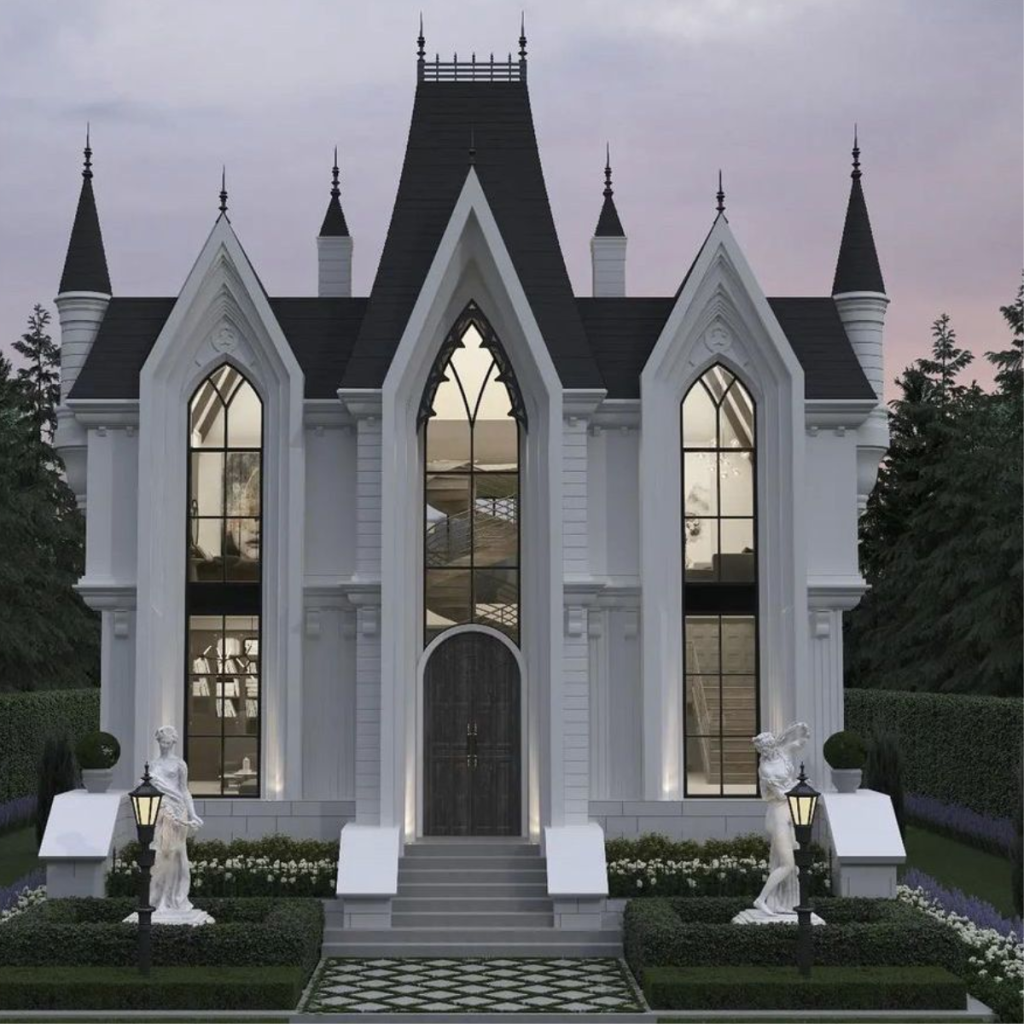
Imagine walking into a home where soaring ceilings, dramatic windows, natural light, and minimalist interiors exist in perfect harmony. Many homeowners love the mystery and grandeur of Gothic architecture but worry that it feels too dark, expensive, or outdated for modern living. The challenge is finding a design style that preserves historical beauty while offering the comfort, efficiency, and practicality expected in today’s homes.
If you’ve ever admired medieval cathedrals or historic manor houses but couldn’t imagine living in one, you’re not alone. Traditional Gothic homes often seem difficult to maintain, overly ornate, and unsuitable for modern lifestyles. Fortunately, house modern gothic architecture bridges the gap between history and innovation, creating homes that feel both timeless and remarkably livable.
In this comprehensive guide, you’ll discover everything you need to know about house modern gothic architecture, including its defining features, materials, structural elements, interior design ideas, landscaping, costs, advantages, and frequently asked questions. Whether you’re building a new home or renovating an existing property, this guide will help you create a residence that is elegant, functional, and unforgettable.
For more architecture and cultural heritage insights, visit Culture Mosaic.
What Is House Modern Gothic Architecture?
House modern gothic architecture is a contemporary interpretation of traditional Gothic architecture that combines medieval-inspired elements with clean modern design principles.
Instead of copying centuries-old castles or churches, architects reinterpret iconic Gothic characteristics such as:
- Pointed arches
- Vertical proportions
- Large windows
- Dramatic rooflines
- Stone textures
- Natural lighting
- Minimal ornamentation
- Open floor plans
The result is a sophisticated home that feels luxurious without appearing overly decorative.
Why Is Modern Gothic Architecture Becoming So Popular?
Today’s homeowners want more than just beautiful houses. They seek homes with personality, history, and emotional impact.
Modern Gothic homes provide:
- Timeless elegance
- Strong architectural identity
- High property value
- Flexible interior layouts
- Excellent natural lighting
- Sustainable building opportunities
Across architectural publications and luxury residential developments, designers continue to showcase contemporary Gothic-inspired homes that blend classic craftsmanship with energy-efficient construction and modern comfort. This growing interest reflects a broader trend toward distinctive homes that stand apart from conventional suburban designs.
The Evolution of Gothic Design into Modern Homes
Traditional Gothic architecture originated in Europe during the 12th century. It emphasized height, light, and spiritual symbolism through structural innovations.
Modern architects preserve the emotional power of Gothic architecture while simplifying unnecessary decoration.
Today’s version focuses on:
- Simplicity
- Sustainability
- Open spaces
- Smart home technology
- Energy efficiency
- Functional luxury
Rather than recreating medieval buildings, designers reinterpret their proportions and visual language for contemporary lifestyles.
Key Features of House Modern Gothic Architecture
1. Pointed Arches
The pointed arch remains the signature feature.
It appears in:
- Doorways
- Windows
- Hallways
- Built-in shelving
- Interior transitions
Instead of heavy ornamentation, modern versions use crisp lines and subtle detailing.
2. Dramatic Vertical Design
Vertical emphasis creates an impressive visual experience.
Characteristics include:
- Double-height ceilings
- Tall windows
- Vaulted interiors
- High entryways
These proportions make rooms feel larger and brighter.
3. Expansive Glass Windows
Modern Gothic houses replace many traditional stained-glass windows with:
- Floor-to-ceiling glazing
- Steel-framed windows
- Black aluminum frames
- Energy-efficient insulated glass
Natural light balances the darker exterior materials.
To understand the origins of stained glass in Gothic architecture, read Gothic Stained Glass Windows History.
4. Steep Rooflines
Roofs typically feature:
- High-pitched gables
- Cross-gables
- Slate roofing
- Standing seam metal roofs
These dramatic silhouettes distinguish the home from conventional contemporary houses.
5. Natural Stone and Brick
Popular exterior materials include:
- Limestone
- Granite
- Dark brick
- Basalt
- Concrete panels
- Charred timber
These materials provide durability while reinforcing the Gothic aesthetic.
Structural Elements That Define Modern Gothic Homes
Unlike purely decorative styles, Gothic architecture relies on structural expression.
Important structural components include:
Ribbed Vault-Inspired Ceilings
Modern homes often reinterpret ribbed vaults through:
- Exposed beams
- Geometric ceiling patterns
- Engineered timber structures
Buttress-Inspired Forms
While flying buttresses are rarely necessary in residential construction, architects borrow their visual language by using:
- Vertical wall projections
- Deep window recesses
- Layered exterior walls
Tall Window Systems
Large windows maximize daylight while emphasizing vertical proportions.
Many include:
- Triple glazing
- Low-E coatings
- Thermal insulation
Materials Used in House Modern Gothic Architecture
Modern Gothic homes combine historic materials with advanced construction technology.
Popular choices include:
- Natural stone
- Steel
- Engineered wood
- Concrete
- Glass
- Zinc cladding
- Slate
- Reclaimed timber
This blend creates durability while reducing long-term maintenance.
Interior Design Ideas for Modern Gothic Homes
Modern Gothic interiors are surprisingly bright and welcoming.
Common characteristics include:
- Neutral walls
- Dark accents
- Natural textures
- Layered lighting
- Sculptural furniture
- Minimal clutter
The goal is elegance rather than heaviness.
Modern Living Room Rugs Interior Design Ideas
Area rugs soften dramatic architecture while defining functional spaces.
Some excellent modern living room rugs interior design ideas include:
- Oversized neutral wool rugs
- Textured handmade rugs
- Geometric monochrome patterns
- Layered natural fiber rugs
- Contemporary Persian-inspired designs
For additional inspiration, explore modern living room rugs interior.
Living Room Rugs – IKEA: Are They Suitable?
Many homeowners ask whether living room rugs – IKEA complement Gothic-inspired interiors.
The answer is yes.
Choose designs featuring:
- Deep charcoal
- Ivory
- Muted earth tones
- Minimal geometric textures
These affordable rugs pair surprisingly well with stone walls, timber flooring, and dramatic windows.
Rug Placement Living Room with TV
Correct rug placement living room with TV improves visual balance.
General guidelines include:
- Front furniture legs on the rug
- Rug extending beyond the sofa
- TV centered with seating
- Maintain equal spacing around furniture
Proper placement creates harmony without overwhelming the room.
Rug Placement Bedroom
Thoughtful rug placement bedroom design enhances warmth and comfort.
Popular layouts include:
- Large rug beneath the entire bed
- Two runners on each side
- Rug extending two feet beyond the footboard
These arrangements create luxurious visual symmetry.
Exterior Design Elements
Modern Gothic homes often include:
- Black-framed windows
- Stone facades
- Copper gutters
- Vertical landscaping
- Arched entryways
- Modern lighting
- Native gardens
The exterior feels elegant rather than intimidating.
Color Palette
The most successful homes combine:
Light colors:
- Warm white
- Soft gray
- Beige
- Limestone
Dark accents:
- Matte black
- Forest green
- Charcoal
- Bronze
Natural wood balances the contrast.
Sustainability in Modern Gothic Architecture
Many contemporary Gothic homes prioritize environmental responsibility.
Features may include:
- Solar panels
- Rainwater harvesting
- High-performance insulation
- Triple-glazed windows
- Heat pumps
- Smart lighting systems
- Recycled building materials
These upgrades improve comfort while reducing energy consumption.
Is House Modern Gothic Architecture Expensive?
Costs vary depending on location, materials, and customization.
Factors influencing budget include:
- Stone cladding
- Custom windows
- Roof complexity
- Interior finishes
- Structural engineering
Although initial costs may exceed those of standard homes, quality materials and timeless design often contribute to strong long-term value.
Pros and Cons
Advantages
- Distinctive appearance
- Exceptional curb appeal
- Timeless elegance
- Bright interiors
- Durable materials
- High resale appeal
- Flexible modern layouts
Challenges
- Higher construction costs
- Specialized craftsmanship
- Custom windows may increase budget
- Complex roof structures
Design Tips Before Building
Before beginning your project:
- Work with an architect experienced in Gothic-inspired residential design.
- Prioritize natural light.
- Balance dark materials with bright interiors.
- Invest in quality windows.
- Choose timeless finishes over trends.
- Incorporate sustainable technologies.
- Keep ornamentation purposeful rather than excessive.
Inspiring Examples
Across North America, Europe, and Australia, architects have successfully blended Gothic inspiration with minimalist living. Award-winning residences often feature steep rooflines, expansive glazing, stone facades, and open interiors that demonstrate how historical design language can coexist with modern functionality. These projects consistently receive praise from homeowners for their distinctive appearance, comfortable layouts, and enduring value.
If you’d like to explore another perspective on the topic, visit house modern gothic architecture.
Final Thoughts
A thoughtfully designed house modern gothic architecture project offers far more than dramatic aesthetics. It combines centuries of architectural inspiration with the comfort, sustainability, and functionality demanded by modern families. From soaring ceilings and pointed arches to energy-efficient materials and carefully curated interiors, this style creates homes that feel both timeless and personal.
Whether you’re planning a new build or renovating an existing property, embracing modern Gothic design allows you to enjoy the romance of history without sacrificing contemporary convenience. By pairing striking architectural features with practical interior choices—such as well-placed rugs, balanced lighting, and sustainable materials—you can create a home that is beautiful, welcoming, and built to last.
Frequently Asked Questions About House Modern Gothic Architecture
1. What is house modern gothic architecture?
House modern gothic architecture is a residential design style that combines traditional Gothic elements—such as pointed arches, steep roofs, and vertical proportions—with contemporary layouts, minimalist interiors, energy-efficient construction, and modern materials.
2. Is modern Gothic architecture suitable for small houses?
Yes. Even compact homes can incorporate Gothic-inspired features such as tall windows, arched doorways, dramatic rooflines, and natural stone accents without requiring a large footprint. Thoughtful design can create a sense of height and openness regardless of size.
3. Which materials are best for a modern Gothic home?
Natural stone, brick, steel, engineered timber, concrete, slate, zinc, and high-performance glass are among the most popular materials. They provide durability, visual contrast, and long-term performance while supporting the Gothic aesthetic.
4. How do I decorate a modern Gothic living room?
Focus on clean lines, layered lighting, neutral walls, dark accents, quality furniture, and textured area rugs. Incorporating artwork, natural wood, and carefully selected décor creates warmth without overwhelming the space.
5. Does house modern gothic architecture increase property value?
A well-designed modern Gothic home can attract buyers seeking distinctive architecture and premium craftsmanship. While resale value depends on factors such as location, build quality, and market conditions, unique homes with timeless appeal often command strong interest.
